
The Ultimate Guide to On-Page SEO Success
In today’s highly competitive digital landscape, mastering On-Page SEO is one of the fastest ways to improve search engine visibility, increase organic traffic, and achieve higher rankings. Search engines continuously evolve, but one principle remains constant: websites with properly optimized pages consistently outperform those with poor optimization.
A strong On-Page SEO strategy ensures that search engines clearly understand your content while delivering an exceptional user experience. By optimizing every critical element of a webpage, businesses can gain a significant competitive advantage and accelerate ranking improvements.
What Is On-Page SEO?
On-Page SEO refers to the practice of optimizing individual web pages to improve their rankings in search engine results pages (SERPs). It includes optimizing content, HTML source code, user experience, internal linking, images, page speed, and other ranking factors directly controlled within the website.
Unlike Off-Page SEO, which focuses on backlinks and external signals, On-Page SEO gives complete control over optimization efforts and often delivers faster results.
Conduct Comprehensive Keyword Research
Every successful SEO campaign begins with effective keyword research.
When selecting target keywords, focus on:
- Primary keywords with strong search volume
- Long-tail keywords with lower competition
- User intent-based phrases
- Question-based keywords
- Semantic and LSI keywords
For example, if the target keyword is “On-Page SEO”, related terms may include:
- On-Page SEO checklist
- On-Page SEO techniques
- SEO optimization guide
- Improve Google rankings
- Website SEO optimization
- SEO best practices
Strategically placing these keywords throughout the content helps search engines understand topical relevance.
Create High-Quality Content That Dominates Search Results
Content remains the foundation of SEO success.
High-ranking pages typically demonstrate:
- Comprehensive topic coverage
- Accurate information
- Clear organization
- Expert-level insights
- User-focused solutions
When writing content:
- Address search intent immediately.
- Cover the topic in depth.
- Use short paragraphs for readability.
- Include examples and actionable recommendations.
- Update content regularly.
Search engines reward content that provides complete answers and keeps visitors engaged longer.
Optimize Your Title Tags for Maximum Click-Through Rates
The title tag is one of the most powerful On-Page SEO elements.
Best practices include:
- Keep titles between 50–60 characters.
- Place the primary keyword near the beginning.
- Include compelling modifiers.
- Create curiosity without being misleading.
Example:
How to Master On-Page SEO and Outrank Competitors in 2026
An optimized title improves both rankings and click-through rates.
Write Compelling Meta Descriptions
Although meta descriptions are not a direct ranking factor, they significantly influence user behavior.
Effective meta descriptions:
- Stay within 150–160 characters.
- Include the target keyword.
- Highlight benefits.
- Encourage clicks.
Example:
Learn proven On-Page SEO strategies that improve rankings, boost traffic, and help you outrank competitors faster than ever.
Structure Content with Proper Heading Tags
Heading tags improve both user experience and search engine understanding.
Recommended hierarchy:
- H1 for the main title
- H2 for major sections
- H3 for subsections
- H4 when deeper organization is required
A well-structured page enhances readability and makes content easier for search engines to crawl.
Optimize URLs for Better Rankings
SEO-friendly URLs improve crawlability and user trust.
Good URL:
yourdomain.com/on-page-seo-guide
Poor URL:
yourdomain.com/post?id=12345
Best practices:
- Keep URLs short.
- Include the primary keyword.
- Avoid unnecessary parameters.
- Use hyphens instead of underscores.
Clean URLs contribute to stronger search visibility.
Strategically Place Keywords Throughout Content
Keyword placement remains critical for relevance.
Include primary keywords in:
- Title tag
- Meta description
- H1 heading
- First 100 words
- H2 headings
- Image alt text
- URL
- Conclusion
Avoid keyword stuffing. Natural integration improves readability and search engine trust.
Master Internal Linking for SEO Growth
Internal linking distributes authority throughout a website and helps search engines discover important pages.
Benefits include:
- Better crawlability
- Improved user navigation
- Increased page authority
- Longer session durations
Best practices:
- Link to relevant pages.
- Use descriptive anchor text.
- Prioritize high-value pages.
- Maintain logical site architecture.
Strong internal linking can significantly improve rankings across an entire website.
Optimize Images for Search Visibility
Images contribute to both SEO and user engagement.
Image optimization checklist:
- Use descriptive filenames.
- Compress file sizes.
- Add keyword-rich alt text.
- Implement responsive images.
- Use modern formats such as WebP.
Example alt text:
“On-Page SEO optimization checklist for higher Google rankings.”
Optimized images improve page speed and enhance accessibility.
Improve Page Speed and Core Web Vitals
Website speed is a confirmed ranking factor.
Key performance metrics include:
Largest Contentful Paint (LCP)
Measures loading performance.
Interaction to Next Paint (INP)
Measures responsiveness.
Cumulative Layout Shift (CLS)
Measures visual stability.
Optimization strategies:
- Enable browser caching.
- Minify CSS and JavaScript.
- Use a Content Delivery Network (CDN).
- Compress images.
- Reduce server response times.
Fast-loading websites consistently achieve better engagement and rankings.
Focus on Mobile-First Optimization
Google uses mobile-first indexing, making mobile optimization essential.
Ensure your website:
- Adapts to all screen sizes.
- Loads quickly on mobile devices.
- Uses readable font sizes.
- Maintains touch-friendly navigation.
- Avoids intrusive pop-ups.
A seamless mobile experience improves rankings and conversion rates.
Enhance User Experience Signals
Search engines evaluate user engagement metrics.
Key UX factors include:
- Easy navigation
- Clear page structure
- Fast loading times
- Attractive design
- Accessible content
When users stay longer and interact more, search engines interpret those signals positively.
Implement Schema Markup
Schema markup helps search engines understand page content more effectively.
Common schema types:
- Article Schema
- FAQ Schema
- Breadcrumb Schema
- Product Schema
- Review Schema
- Local Business Schema
Structured data increases the likelihood of earning rich snippets and enhanced search visibility.
Optimize for Featured Snippets
Featured snippets occupy premium search engine real estate.
To improve snippet eligibility:
- Answer questions directly.
- Use numbered lists.
- Create concise definitions.
- Organize content logically.
- Include FAQ sections.
Winning featured snippets can dramatically increase organic traffic.
Create SEO-Friendly Content Updates
Fresh content signals relevance.
Regularly update:
- Statistics
- Examples
- Internal links
- Screenshots
- Industry trends
Content refreshes often result in ranking improvements without creating entirely new pages.
Use E-E-A-T Principles for Greater Authority
Google rewards websites demonstrating:
Experience
First-hand knowledge and expertise.
Expertise
Deep understanding of the subject.
Authoritativeness
Industry recognition and credibility.
Trustworthiness
Accurate and reliable information.
Building E-E-A-T strengthens long-term ranking potential and user confidence.
Advanced On-Page SEO Techniques Used by Top-Ranking Websites
Leading websites consistently apply advanced optimization strategies such as:
- Topic clusters
- Semantic SEO
- Content hubs
- NLP keyword optimization
- Entity-based SEO
- Strategic internal linking
- User intent mapping
These techniques help search engines understand topical authority across an entire website.
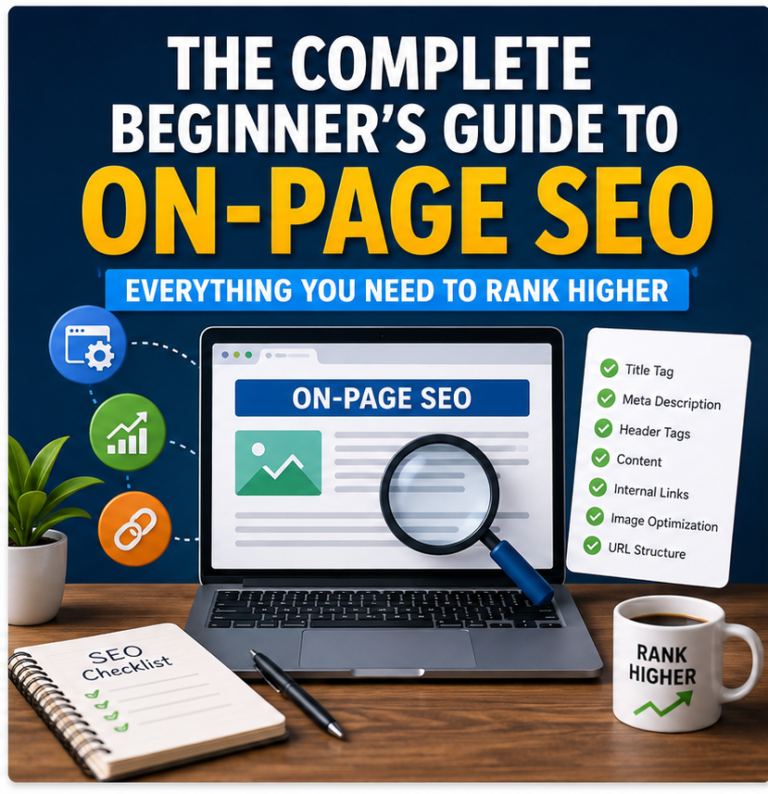
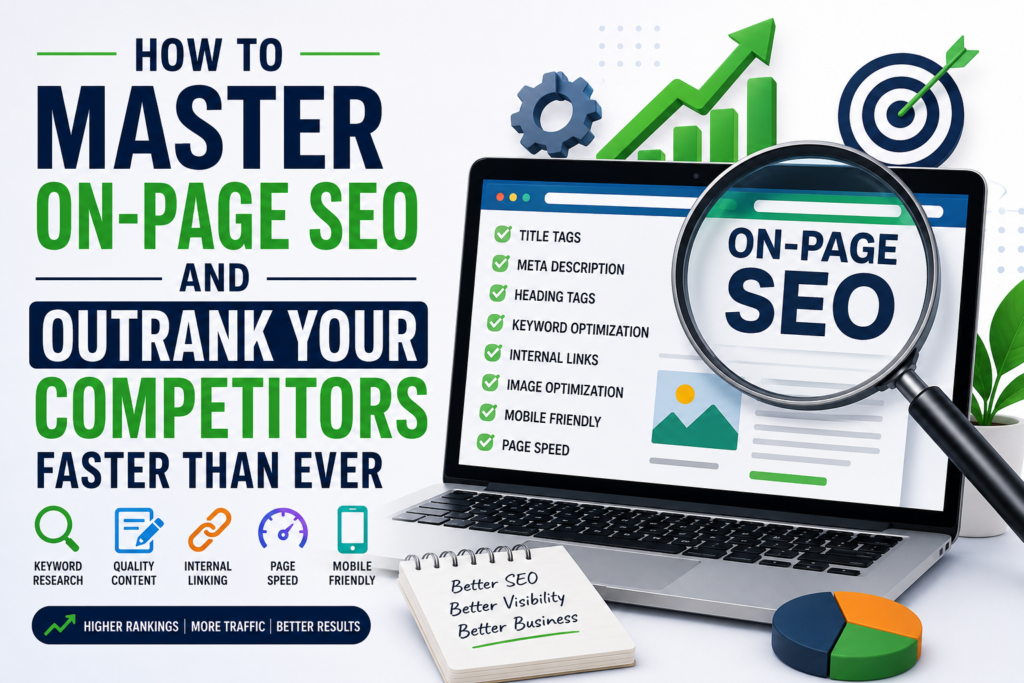
Complete On-Page SEO Checklist
Before publishing any page, verify:
✅ Target keyword researched
✅ SEO-friendly URL created
✅ Optimized title tag written
✅ Compelling meta description added
✅ Proper heading structure implemented
✅ Internal links included
✅ External authority links added
✅ Images optimized
✅ Mobile responsiveness tested
✅ Page speed optimized
✅ Schema markup implemented
✅ Content updated and proofread
✅ User experience reviewed
Conclusion
Mastering On-Page SEO requires a strategic combination of keyword optimization, content quality, technical enhancements, user experience improvements, and structured website architecture. Websites that consistently optimize titles, content, internal links, page speed, mobile usability, and search intent alignment gain a measurable competitive advantage in search rankings.
By implementing these proven On-Page SEO techniques, businesses can increase organic visibility, improve user engagement, attract qualified traffic, and outrank competitors faster than ever. Consistent optimization, regular content updates, and a commitment to delivering exceptional user experiences remain the foundation of sustainable SEO success.
Article Written by Ashish Kumar Yadav
Website: https://ashishkumaryadav.com/
Digital Marketing Specialist | SEO, Google Ads & Performance Marketing